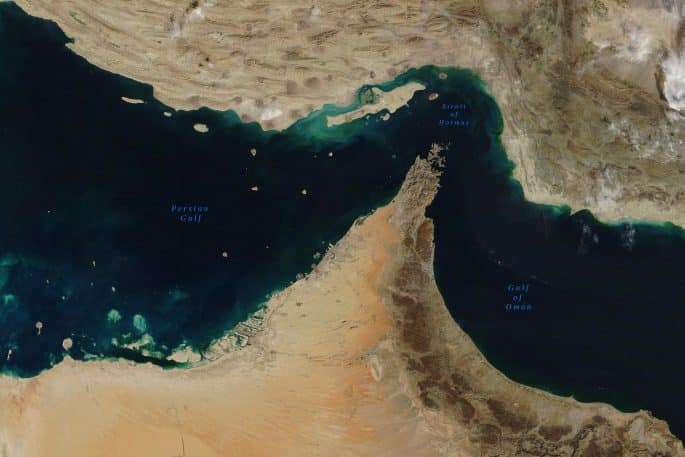
★Maersk warns of unpredictable security in Strait of Hormuz
What This Means
- →Hormuz insecurity → increased energy costs for businesses and consumers globally.
- →Supply chain disruption → higher inflation and reduced discretionary spending power.
- →Geopolitical instability → investors will seek safe-haven assets over riskier crypto.
"Rising geopolitical tensions in a key shipping lane could spike global oil prices. This kind of macro instability often drives investors towards alternative assets like Bitcoin, viewing it as a hedge against traditional market turmoil and inflation."

The Big Coin Report Take
Maersk, a global shipping giant, has issued a warning regarding unpredictable security conditions in the Strait of Hormuz. This development is significant for Bitcoin and the broader crypto market because heightened geopolitical tensions and potential disruptions to global oil markets can lead to increased energy prices and overall economic instability. Such uncertainty often influences investor sentiment, potentially driving capital towards or away from risk assets like cryptocurrencies. The key takeaway is the potential for global supply chain and energy market volatility. Investors should watch for further escalation in the region and its impact on traditional financial markets, as this will likely ripple into crypto.
What To Watch
- 1.BTC $68,500 — a sustained break below this level, particularly on high volume, indicates a loss of short-term bullish momentum and could open the path to retesting $65,000 support.
- 2.Stablecoin Dominance (excluding USDT) — a significant increase above 15% signals a flight to safety within the crypto market, often preceding broader market corrections as capital moves out of riskier assets.
- 3.Escalation of Middle East conflicts leading to sustained oil price spikes above $100/barrel — this would fuel global inflation, forcing central banks to maintain higher interest rates for longer, thereby reducing liquidity and investor appetite for risk assets like crypto.
The Big Picture
The ongoing instability in critical shipping lanes reveals an increasingly fragile global supply chain, susceptible to geopolitical shocks. This underscores a persistent inflation risk, as energy and goods costs will remain elevated due to these external pressures.
Related Guides
Never miss a story
More from this section
 First LNG shipment since Iran war exits Strait of HormuzCrypto Briefing1h ago
 OpenAI misses targets, SoftBank and Oracle shares declineCrypto Briefing1h ago
 Israeli air strikes target Hezbollah positions north of Litani River in LebanonCrypto Briefing1h ago
 Radev’s Progressive Bulgaria wins election, securing parliamentary majorityCrypto Briefing1h ago
 IDF dismantles 1,000 Hezbollah positions, seizes weapons in southern LebanonCrypto Briefing1h ago